A leaking water heater almost always traces back to one of five things: the temperature-and-pressure (T&P) relief valve, the drain valve, the inlet or outlet connections, internal tank corrosion, or plain condensation that only looks like a leak. The first four are real leaks; the last one is not. Where the water shows up, and how fast, tells you which you are dealing with. If you are a Brandon, FL homeowner staring at a puddle under the tank, this guide walks through each cause, what a leak from the top, bottom, or side means, and how to decide between a repair and a replacement.
Most water heater leaks come from a failed part rather than the tank itself, and the good news is that parts are repairable. Here are the usual culprits, roughly in the order we find them on service calls across Eastern Hillsborough County:
Brandon sits on a limestone aquifer, so our water is hard, meaning it carries a heavy load of dissolved calcium and magnesium. Over the years that mineral content settles as sediment in the bottom of the tank, where it overheats the base, stresses the glass liner, and consumes the sacrificial anode rod faster. Once the anode is spent, the tank itself starts to corrode. That local water chemistry is the single biggest reason water heaters in our area fail earlier than the manufacturer's rating. A whole-house water softener slows that process down considerably.
Before you call anyone, look at where the water is actually coming from. The location is the most useful first diagnostic you have.
Water pooling on top of the heater usually points to the cold-water inlet or hot-water outlet fittings, or to the T&P valve seated in the upper portion of the tank. Loose or corroded connections are common and typically repairable. Because gravity pulls the water down the sides, a top leak can look worse than it is, so trace it back to the highest wet point to find the real source.
A bottom leak has two very different explanations. The hopeful one is a loose or failing drain valve, which is a simple fix. The other is internal tank corrosion, where rust has finally breached the tank wall and water is escaping from the body of the heater. If the drain valve is dry and water is still collecting underneath, the tank has likely corroded through and replacement is the realistic path.
Side leaks often trace to the T&P discharge line or, on electric units, the gaskets around the heating-element access panels. A discharge-line drip frequently signals excess pressure venting through the valve rather than a valve defect, so the real question becomes why the pressure is high. A plumber can test the incoming pressure and the expansion setup to sort it out.
Not every drip is urgent, but some situations call for shutting the unit down right away. Treat it as an emergency when you see a fast or steady flow rather than a slow drip, when water is reaching electrical connections or a gas burner assembly, or when the tank is bulging or making popping and rumbling sounds under pressure.
If you need to shut it down, do it in this order: close the cold-water inlet valve on top of the heater to stop the supply, then cut the energy source. For an electric unit, switch off its breaker; for a gas unit, turn the gas control knob to OFF. Put a pan or towels under the drip and note where the water originates so the technician can move straight to the fix. Then call us at (813) 707-3215. Drainworks schedules same-day service during business hours (Monday through Friday 7:30 AM to 6:00 PM, Saturday 9:00 AM to 3:00 PM) when the route allows, and active leaks get priority routing.
Some water heater leaks are a reasonable do-it-yourself job, and some are not. The dividing line is safety and the type of failure.
Reasonable DIY, once you have shut off the water and power: tightening a loose drain valve or a supply fitting, or draining and flushing the tank to clear sediment. These are low-risk if you work carefully and confirm the connection is dry afterward.
Leave it to a licensed plumber when the job involves replacing the T&P valve, swapping a heating element or thermostat, or anything on a gas unit. Those carry scald, electrical, or gas risk, and a botched T&P replacement removes a critical safety device. And a corroded tank is never a repair - no sealant or fitting fixes rusted-through steel. When you are not sure which situation you have, have it diagnosed first. Our licensed plumbers handle water heater repair in Brandon, FL and can tell you in one visit whether a part or the whole unit is the problem.
A single failed valve or fitting on an otherwise healthy tank is worth repairing. Replacement makes more sense when the tank itself is leaking, when the unit is past roughly 10 to 12 years old, or when repeated leaks and repairs start stacking up. A common rule of thumb among plumbers is to replace rather than repair once a fix approaches about half the cost of a new install, since you would be pouring money into an aging tank.
Hard-water areas like Brandon shorten tank life, so a heater here may reach the replace-it stage earlier than one up north. Drainworks installs State and A.O. Smith tank units and Rinnai and Navien tankless units, and we offer Wisetack financing on qualifying jobs. If you are weighing your options, our team handles water heater installation and will quote both a repair and a replacement in writing so you can compare them honestly.
Most leaks come from a failed component - the temperature-and-pressure (T&P) relief valve, the drain valve, or a loose inlet fitting - and those are repairable. If the tank itself is weeping through rust, it has corroded internally and replacement is the only fix. A plumber can tell you which in one visit.
Age and water chemistry. Brandon-area hard water drops calcium sediment into the tank, which overheats the base, stresses the liner, and consumes the anode rod; once the rod is gone, the tank corrodes. Other causes include excess pressure venting through the T&P valve, failed drain valves, and loose supply fittings.
Top leaks are usually inlet/outlet fittings or the T&P valve - typically repairable. Bottom leaks are either a loose drain valve (fixable) or tank corrosion (replacement). Side leaks at the T&P discharge line often mean over-pressure or a failing valve. Where the water shows up is the best first diagnostic.
Close the cold-water inlet valve on top of the heater, then cut power - breaker off for electric, gas control to OFF for gas. Put a pan or towels under the leak, note where the water originates, and call (813) 707-3215. Active leaks get same-day priority during business hours.
Sometimes. Tightening a loose drain valve or supply fitting is a reasonable DIY job if you shut off water and power first. Replacing a T&P valve, an element, or a thermostat carries scald and electrical risk, and a corroded tank is never repairable. When in doubt, have it diagnosed first.
Replace when the tank itself leaks, when the unit is past 10-12 years old, or when repair quotes approach half the cost of a new install. Hard-water areas like Brandon shorten tank life. We install State and A.O. Smith tanks and Rinnai/Navien tankless units, with Wisetack financing on qualifying jobs.
Call or text our licensed plumbers at (813) 707-3215. We schedule same-day service during business hours (Mon-Fri 7:30 AM-6 PM, Sat 9 AM-3 PM) and quote every job in writing before we start.
Book Now (813) 707-3215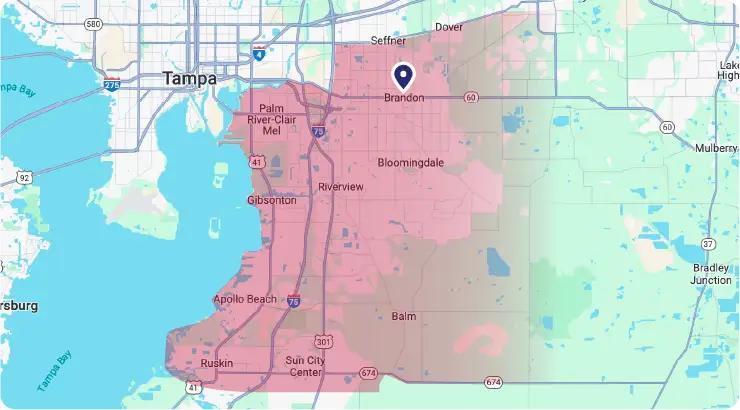
Our team of expert plumbers is ready to assist with all your plumbing needs in Brandon, FL and Eastern Hillsborough County.
Whether you're in need of a repair or planning a plumbing project, we're here to provide reliable, professional service.
Request Service Now
© Drainworks Plumbing & Gas Inc. 2026 | All Rights Reserved
Website by Red Barn Media Group